Quick Facts
- Category: Science & Space
- Published: 2026-05-13 11:30:22
- Prepersonalization Workshop: The Critical Missing Step in AI-Driven Product Design
- Navigating the Proposed Approval of 7-Hydroxymitragynine: A Practical Guide for Stakeholders
- Cracking Down on Cyber Complicity: Two IT Security Advisors Sentenced to 4 Years for BlackCat Ransomware Role
- Mastering GitHub Copilot CLI: Interactive and Non-Interactive Modes Explained
- Mastering Modern Power System Studies: Modeling and Simulation Q&A
A New Chapter in Mars Aviation
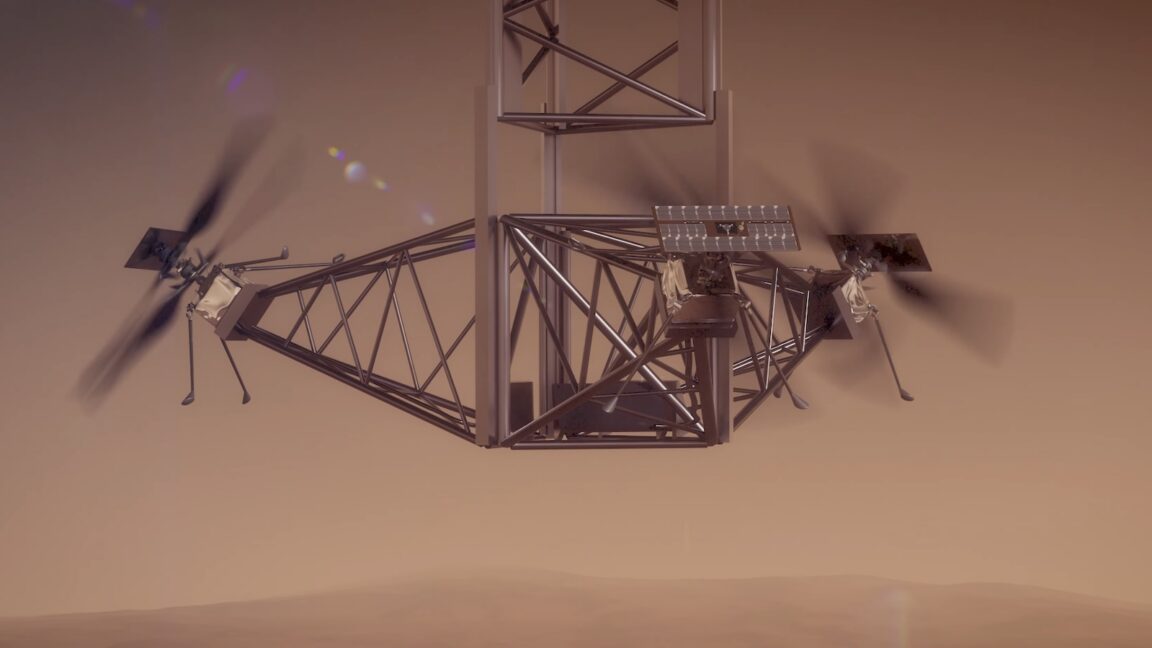
Three years after NASA's Ingenuity helicopter concluded its groundbreaking mission on Mars, engineers at the Jet Propulsion Laboratory (JPL) in California are pushing the boundaries of rotor technology. Their goal: design advanced Martian rotorcraft capable of carrying heavier payloads over longer distances through the planet's thin, low-density atmosphere. This next generation of aerial explorers builds directly on the lessons learned from Ingenuity, which demonstrated that powered flight on another world is not only possible but also revolutionary for planetary science.
The Legacy of Ingenuity
Ingenuity arrived on Mars in February 2021, tucked beneath the Perseverance rover. Originally intended as a technology demonstration with a modest target of five flights over 30 days, the small dual-bladed helicopter vastly exceeded expectations. Over the course of its mission, Ingenuity completed 72 flights, covering distances far beyond its original design parameters and providing stunning aerial imagery of the Martian landscape. Its final flight ended in a crash-landing in January 2024, but by then the helicopter had already rewritten the playbook for extraterrestrial exploration.
Scientists and engineers hailed Ingenuity as the first airborne platform to explore another world—a milestone that opened up a new dimension for planetary science. By traveling through the air rather than across the ground, rotorcraft can access steep cliffs, deep craters, and other terrain that is impassable for rovers. This capability allows researchers to gather data from previously unreachable locations, dramatically expanding the scope of Mars exploration.
Engineering Challenges for Martian Rotorcraft
The primary challenge for Mars rotorcraft lies in the planet's thin atmosphere, which has only about 1% of Earth's density. To generate enough lift, rotors must spin at extremely high speeds—Ingenuity's blades rotated at approximately 2,400 rpm. For next-generation designs, engineers at JPL face additional hurdles: heavier payloads demand larger rotors, more powerful motors, and more efficient aerodynamic configurations. The goal is to increase both payload capacity (from Ingenuity's roughly 4 pounds to tens of pounds) and range (from hundreds of meters to several kilometers per flight).
Breakthroughs in Rotor Technology
Recent advances at JPL have focused on composite blade materials and improved blade geometry. New carbon-fiber rotor designs incorporate a larger chord and more efficient airfoil shapes to produce greater lift at lower speeds, reducing power consumption. Engineers are also experimenting with coaxial rotor configurations—two sets of counter-rotating blades stacked on the same axis—to increase stability and thrust without enlarging the rotor diameter excessively. Computational fluid dynamics simulations and tests in the world's largest vacuum chamber at JPL have validated these concepts, bringing them closer to flight-ready status.
The SkyFall Mission: Flying Higher and Farther
NASA's next step in Mars rotorcraft development is the ambitious SkyFall mission, which could launch as early as late 2028. SkyFall plans to send three advanced helicopters to the Red Planet—a significant increase over the single Ingenuity. These rotorcraft will be larger and more capable, designed to carry sophisticated scientific instruments such as spectrometers, ground-penetrating radars, and atmospheric sensors. They are intended to explore regions of interest—like the slopes of Mount Sharp or the polar ice caps—that are too treacherous for rovers.
Nuclear-Powered Transport to Mars
SkyFall will ride to Mars aboard a nuclear-powered spacecraft named Space Reactor-1 (SR-1), one of the technology demonstration initiatives announced earlier this year by NASA Administrator Jared Isaacman. The SR-1 spacecraft uses a compact fission reactor to provide both propulsion and power during the journey, enabling a faster transit time and more precise arrival at Mars. This nuclear propulsion system could also support future human missions by demonstrating reliable, high-efficiency space travel. Once deployed, the three helicopters will detach from the lander and begin their independent missions.
Future Implications for Planetary Exploration
The advances in rotor technology and mission architecture from SkyFall promise to transform how we explore not only Mars but also other bodies with atmospheres, such as Saturn's moon Titan. The techniques developed for flying in Mars' thin air are directly applicable to Titan's dense, methane-rich sky, where rotorcraft could soar for kilometers with minimal power. Furthermore, by incorporating heavier payloads, future missions could deploy networks of aerial drones to scout terrain, deploy instruments, and even relay communications between rovers and orbiters.
As JPL engineers refine their designs and await the SkyFall launch window, the legacy of Ingenuity lives on. The little helicopter that could has paved the way for a new era of exploration—one where the sky is no longer the limit, even on another world.
Back to top | Legacy of Ingenuity | Engineering Challenges | SkyFall Mission