Quick Facts
- Category: Science & Space
- Published: 2026-05-04 21:41:02
- 7 Game-Changing Benefits of the Mend.io and Docker Hardened Images Integration for Security Teams
- The Cloud AI Paradox: Convenience Meets Soaring Costs
- Your Ultimate Guide to the Latest Loungefly Star Wars Bag Collection
- Navigating the Path to Zero: A Practical How-To Guide for Maritime Decarbonization
- How to Choose Award-Winning Bourbon on a Budget: A Step-by-Step Guide
Introduction
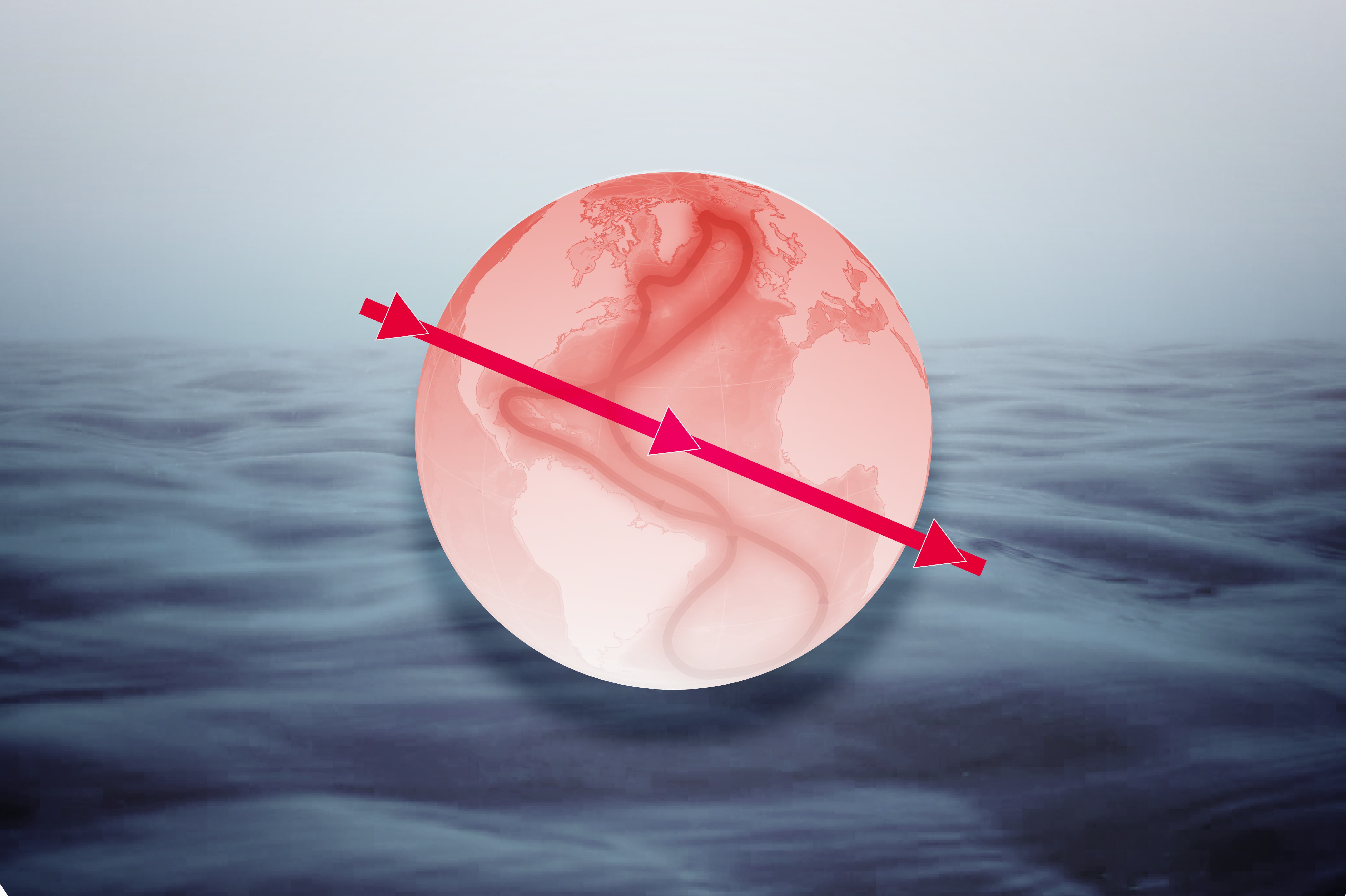
The Atlantic Meridional Overturning Circulation (AMOC) is a massive system of ocean currents that moves warm water from the tropics toward the North Atlantic, where it cools and sinks, then travels back southward. This process distributes heat globally, keeps Europe relatively warm, and influences rainfall patterns. However, human-caused climate change is disrupting this delicate balance: warming seas, melting ice, and increased rainfall are altering the temperature and salt levels in the North Atlantic. Scientists have warned that the AMOC may be slowing down and could reach a tipping point, eventually transitioning to a weaker state or even collapsing. This guide provides a structured approach to understanding the science, threats, and debates surrounding a potential AMOC collapse, helping you evaluate the risks and stay informed.
What You Need
- Basic knowledge of climate science – Familiarity with concepts like global warming, ocean currents, and tipping points.
- Access to scientific reports – Key documents include Intergovernmental Panel on Climate Change (IPCC) assessments and peer-reviewed studies on AMOC.
- Understanding of oceanography terms – Such as salinity, density, thermohaline circulation, and freshwater flux.
- Critical thinking skills – To weigh differing scientific opinions and uncertainties.
Step-by-Step Guide
Step 1: Understand the Role and Mechanism of the AMOC
Start by grasping what the AMOC does. It is part of a global conveyor belt that moves water, heat, nutrients, and carbon. Warm, salty water travels northward near the surface, releasing heat to the atmosphere, which moderates European winters. As the water cools and becomes denser due to high salinity, it sinks in the North Atlantic and flows southward at depth. This sinking drives the entire circulation. Recognize that the AMOC is not a single current but a complex system interacting with other ocean cycles.
Step 2: Identify the Threats from Climate Change
Human activities are heating the planet. Warmer air and sea temperatures reduce the density contrast needed for sinking. Additionally, melting ice from Greenland and increased rainfall add fresh water to the North Atlantic, lowering salinity and making it harder for water to sink. This freshening can weaken or even stop the deep-water formation. Study how these factors disrupt the temperature-salinity balance (the thermohaline balance) that keeps the AMOC running. Consider long-term trends: the IPCC projects a decline over the 21st century as warming continues.
Step 3: Learn About Tipping Points and System Stability
A tipping point occurs when a small change pushes a system into a new, often irreversible state. For the AMOC, a gradual slowdown could suddenly accelerate if the circulation becomes too weak to sustain itself. Researchers use climate models and paleoclimate data (e.g., past abrupt changes) to identify thresholds. Understand that the AMOC has two stable modes: a strong, present-day mode and a weak, collapsed mode. Crossing the tipping point would shift the system to the weak state for centuries. The exact threshold is uncertain, but it is linked to global warming levels.
Step 4: Evaluate the Evidence of Slowdown and Models
Examine observational data from the last few decades. Direct measurements (e.g., via the RAPID array) suggest that the AMOC has weakened by about 15% since the mid-20th century. However, records are short, and natural variability complicates the signal. Climate models consistently predict a slowing under high emissions scenarios. The IPCC says a collapse before 2100 is unlikely, but some studies warn that the system is approaching a threshold faster than previously thought. Compare different sources: paleo reconstructions, satellite data, and model projections. Note the range of timings—from decades to centuries—depending on assumptions.
Step 5: Understand the Scientific Debate Over Collapse Timing
The scientific community is divided. The IPCC’s cautious stance stems from model limitations and the lack of clear observational evidence for an imminent tipping. However, a growing body of research, including recent advanced model runs, suggests that a tipping point could be reached within this century if greenhouse gas emissions continue unabated. Some scientists argue that an AMOC shutdown might not happen until the next century, but the risk increases with each fraction of a degree. Stay updated by following journal articles and authoritative media like Carbon Brief. Recognize that uncertainty is inherent—both in models and in the chaotic nature of the climate system.
Step 6: Assess the Potential Consequences of a Collapse
A weakened or collapsed AMOC would have severe impacts. First, Europe would cool significantly (by 2-10°C in some scenarios) despite global warming, disrupting agriculture and energy demand. Second, global rainfall patterns would shift—monsoons in Africa and Asia might weaken or relocate, threatening food and water security. Third, sea levels along the U.S. East Coast could rise faster. Fourth, the AMOC collapse could trigger other tipping points, such as ice sheet instability or Amazon dieback. Use these consequences to gauge the urgency of mitigation. Note that even a partial slowdown has major implications.
Tips and Conclusion
- Follow reliable sources – Use IPCC reports, NOAA, and outlets like Carbon Brief for updates.
- Think critically about uncertainty – Low probability does not mean no risk; high-stakes outcomes require precaution.
- Consider the broader context – AMOC is one of several tipping elements; interactions matter.
- Engage with policy discussions – Reducing CO2 emissions is the primary way to avoid reaching tipping points.
Understanding the AMOC’s future is complex. This guide equips you with the framework to evaluate the science and the stakes. By following these steps, you can stay informed and contribute to informed discussions about climate action. Remember that while the AMOC may not collapse tomorrow, the decisions we make today shape the outcome.