Quick Facts
- Category: Science & Space
- Published: 2026-05-05 02:31:49
- North Korean Hackers Exploit AI-Generated npm Packages and Fake Companies in Latest Cyber Espionage Campaign
- How to Secure a Google Summer of Code Project: Lessons from the Rust Project's 2026 Selection Process
- 10 Reasons IBM Bob Is Redefining Enterprise AI Development
- Critical Flaw Turns VECT Ransomware into Unintentional Data Wiper for Large Files
- Cruise Safety: How to Identify and Respond to Hantavirus Risks at Sea
Astronomers have long known that our Milky Way galaxy is not alone—it resides within a vast cosmic web of galaxies, clusters, and superclusters. Yet some of the most massive structures in the universe remain hidden from view, obscured by the very plane of our own galaxy. One such giant is the Vela Supercluster, a colossal assembly of thousands of galaxies located in the so-called Zone of Avoidance. With an estimated mass of 30,000 trillion times the mass of the Sun, this supercluster is not merely a passive feature of the cosmos; it is actively competing gravitationally with other superclusters, pulling on local galaxies and influencing their motions. This article explores what the Zone of Avoidance is, how the Vela Supercluster was discovered, and why it matters for our understanding of large-scale cosmic structure.
What Is the Zone of Avoidance?
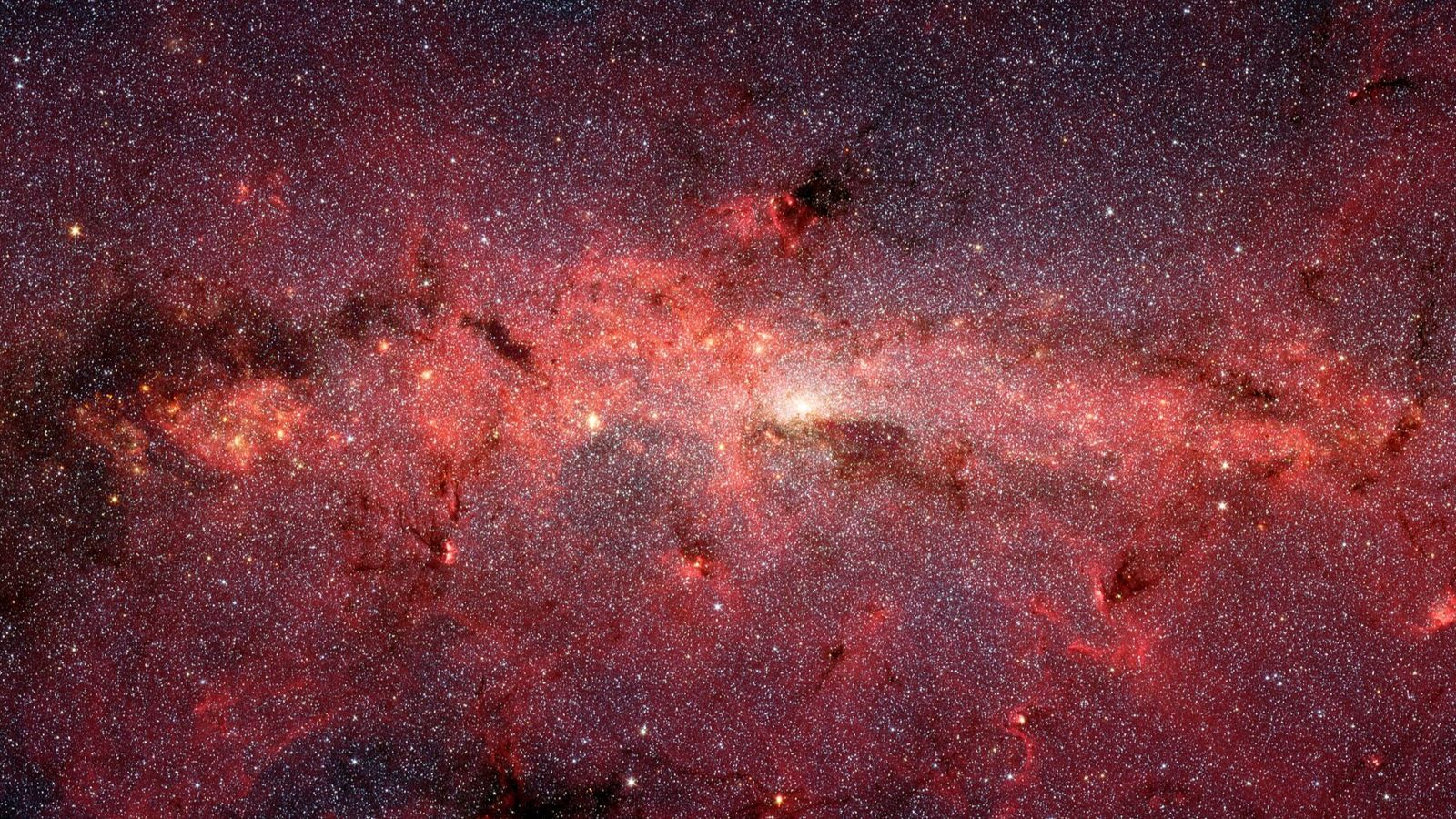
The Zone of Avoidance (ZoA) is a region of the sky that is heavily obscured by the dust and gas of the Milky Way's disk. As we look toward the galactic plane, the thick interstellar medium absorbs and scatters visible light, making it nearly impossible to see extragalactic objects such as other galaxies or galaxy clusters. This obscuration affects about 10–20% of the sky, creating a blind spot in our cosmic maps. For decades, this zone remained largely unexplored at optical wavelengths, hiding many important structures from astronomers.
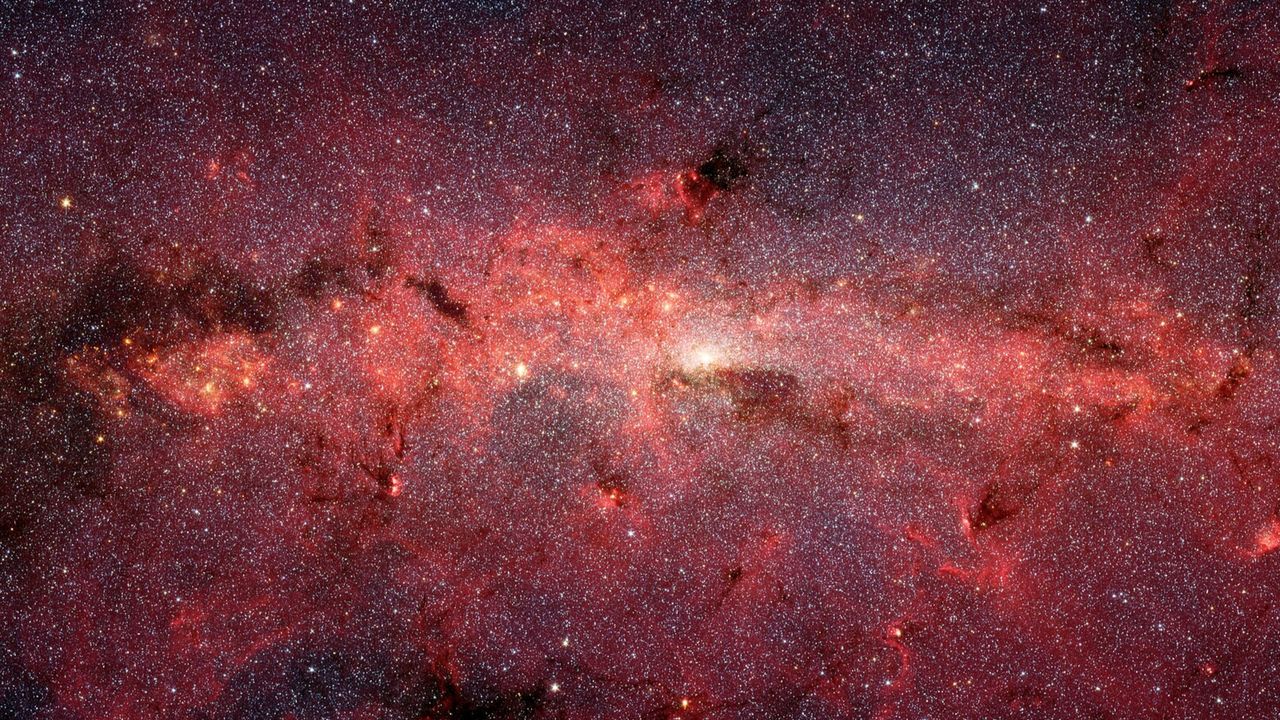
However, other wavelengths—such as radio, infrared, and X-rays—can penetrate this dust, allowing scientists to peek through the veil. Surveys at these wavelengths, including the Two Micron All Sky Survey (2MASS) and the Parkes Radio Telescope, have revealed a wealth of previously unknown galaxies and clusters within the ZoA. Among the most remarkable discoveries is the Vela Supercluster.
The Vela Supercluster: A Hidden Giant
Located in the direction of the southern constellation Vela (the Sail), the Vela Supercluster is a vast concentration of galaxies spanning hundreds of millions of light-years. Its discovery came from surveys that mapped the distribution of galaxies and galaxy clusters in the ZoA. By detecting the 21-cm radio emission from neutral hydrogen or the infrared glow from stars, astronomers were able to chart this supercluster's extent and estimate its total mass.
The mass of the Vela Supercluster—30,000 trillion solar masses—places it among the most massive known superclusters in the nearby universe. To put that in perspective, it is roughly three times more massive than the Laniakea Supercluster, which contains our own Milky Way. This enormous mass exerts a strong gravitational pull, influencing the motion of galaxies far beyond its borders.
Gravitational Competition with Other Superclusters
One of the most fascinating aspects of the Vela Supercluster is its gravitational influence. The universe's large-scale structure is not static; galaxies move under the influence of gravity from nearby masses. Over billions of years, superclusters pull on their neighbors, affecting their velocities and trajectories. The Vela Supercluster is no exception: it is competing gravitationally with other major superclusters, such as the Shapley Supercluster and the Centaurus-Virgo complex, for control over the motion of galaxies in our cosmic neighborhood.
This competition can be observed through the peculiar velocities of galaxies—their deviations from the overall expansion of the universe. By measuring these velocities, astronomers have found that the Vela Supercluster contributes to a large-scale flow of galaxies toward the Shapley concentration, a phenomenon sometimes called the Great Attractor region. The Vela Supercluster's gravitational tug adds to this complex dance, helping to shape the local velocity field.
Impact on the Local Group
Our own Local Group of galaxies—which includes the Milky Way, Andromeda, and dozens of smaller galaxies—is also affected by the Vela Supercluster. Although the supercluster is about 800 million light-years away, its gravity contributes to the net motion of the Local Group relative to the cosmic microwave background. This motion, measured as about 600 km/s, is a combination of pulls from many structures, including the Virgo Cluster, the Great Attractor, and now the Vela Supercluster. Understanding each component helps refine our models of the local universe.
Implications for Cosmology
Discovering massive structures like the Vela Supercluster has important implications for our understanding of the universe on the largest scales. First, it challenges the assumption that the Zone of Avoidance is relatively empty. Instead, it may hide many more superclusters and voids, altering our view of cosmic homogeneity and isotropy. Second, the Vela Supercluster's mass and gravitational influence provide a test for the standard cosmological model (ΛCDM), which predicts the distribution of dark matter and the formation of large-scale structures. If such a massive object exists where it was least expected, it may require adjustments to our models.
Furthermore, the Vela Supercluster's role in the local velocity field is crucial for measuring the Hubble constant. Peculiar velocities caused by superclusters can bias measurements of the expansion rate of the universe. Accounting for the pull of the Vela Supercluster leads to more accurate determinations of cosmic distances and the age of the universe.
Future Observations and Discoveries
The hunt for hidden structures in the Zone of Avoidance is far from over. Future surveys such as the Square Kilometre Array (SKA) in radio wavelengths and the Euclid and WFIRST space telescopes in infrared and optical will peer deeper into the ZoA. These instruments will map thousands of new galaxies, possibly revealing more superclusters comparable to Vela. With each discovery, our picture of the cosmic web becomes richer and more complete.
In summary, the Vela Supercluster is a stunning example of the wonders concealed behind the Milky Way's dusty disk. Its enormous mass and gravitational competition with other superclusters remind us that the universe is a dynamic, interconnected network where even the largest structures vie for dominance. As we continue to lift the veil of the Zone of Avoidance, we can expect more surprises that will reshape our understanding of the cosmos.